It feels like only a few days ago that I was writing about end-of-year teacher appreciation gifts and now here I am, writing about sustainable back-to-school shopping practices. Summer REALLY feels short these days! This seems to be on many people’s minds as I’ve been seeing back-to-school posts all over the place recently.
At my house, we’re already thinking about what we need to buy for back-to-school this year. I thought I’d share some of our process, just in case you’re thinking of switching things up a bit for your household. I’m sure that it isn’t anything groundbreaking or unique but maybe it’s that Something Different (Eh? See what I did there?) that gives you some ideas or inspiration.
My goals
1. Buy only what we need.
2. Look to secondhand first for most clothing items.
3. Keep clothing and other items in good repair so that they last longer. They can also be more easily passed along once our kiddo has outgrown them.
For me, the biggest thing to remember is that I do not need to buy – because my child does not need – all new stuff every year.
So how do I actually DO sustainable back-to-school shopping? Read on!
Inventory What’s Already Here
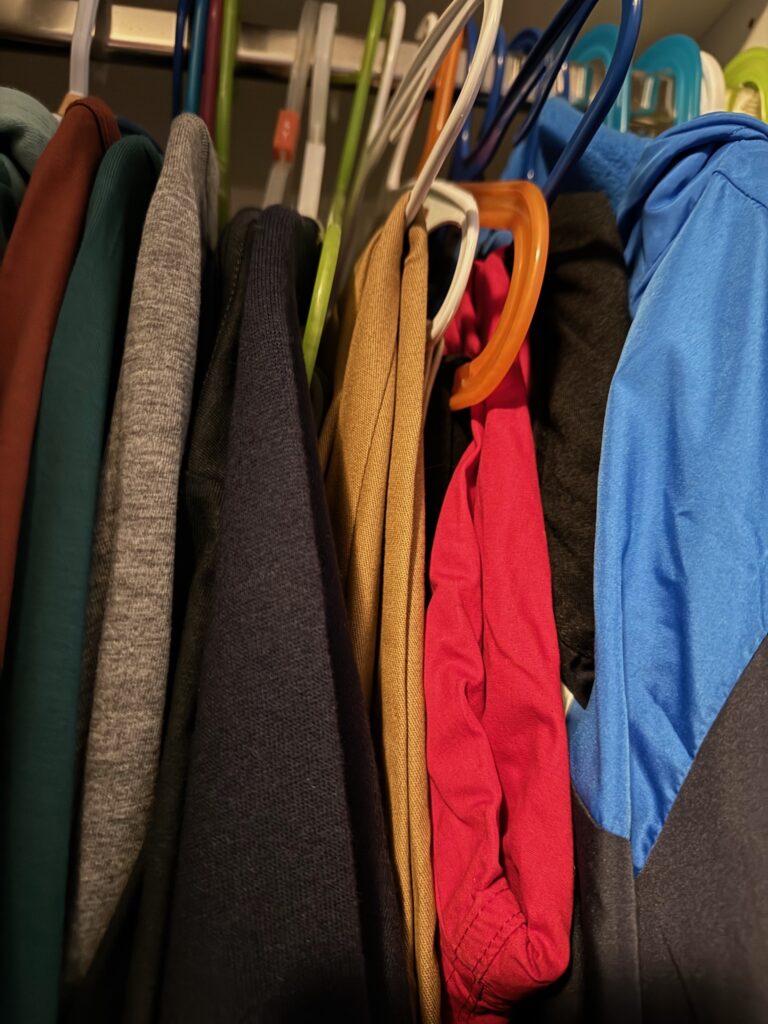
We start by pulling out all of the school clothes and fall/winter clothes that still fit in the spring. Then we do a try-on. I’m lucky that my child really seems to enjoy this process. If yours doesn’t, consider working in stages over a few days rather than in one long session. Growth spurts happen, sometimes without us realizing how much growth has occurred. The try-on is a key step to figuring out what we need to find for the upcoming school year.
Special note for children who are still growing quickly:
Make note of what you need seasonally and work toward being prepared for the closest season. You want to make sure that your child has clothing that fits for the season. For example, where we are, shorts and t-shirts are likely to be worn to school for at least the first few weeks. The really cold and wet winter weather won’t start here until almost December. We’ll come back to winter outwear closer to the time to make sure that we find outerwear that fits for the season.
Got hand-me-downs? The same process applies. You’ll need to go through everything to make sure that the available clothing fits properly, is seasonally appropriate, and is in good repair.
Buying at the end of a season can be a great way to save money. It can also backfire if your child is growing quickly or is prone to dramatic growth spurts. You might have to re-buy everything, after all!
Required Supplies
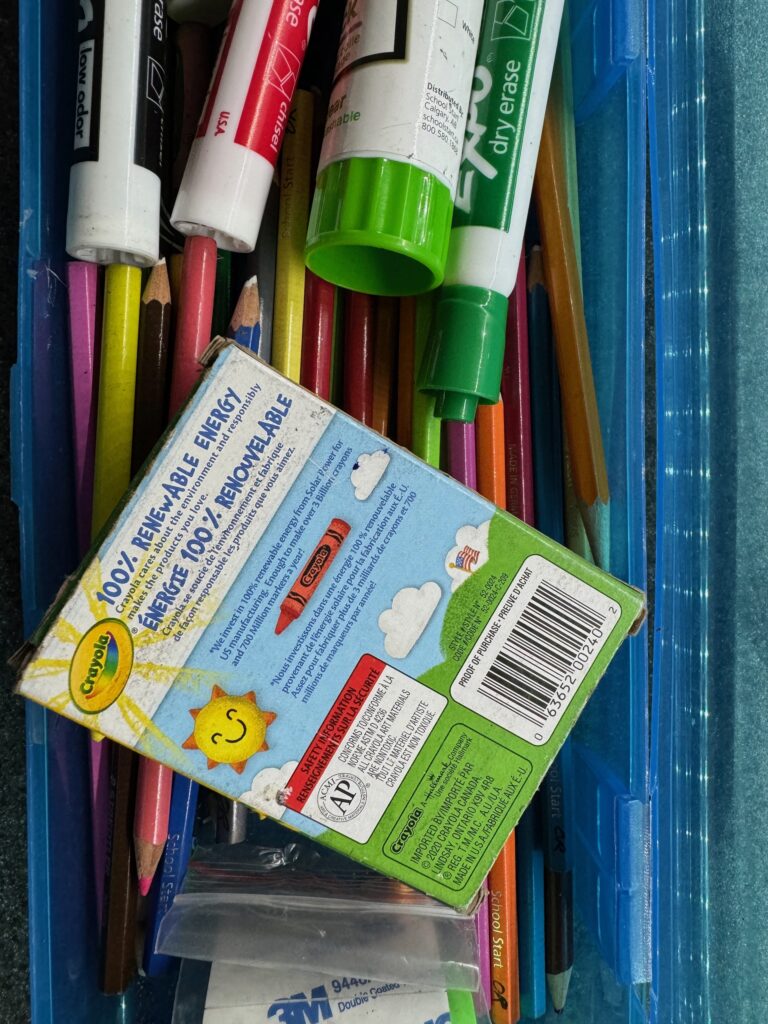
We also go through the required school supplies list provided by the school and compare it to what we already have. No need to buy a new pair of school scissors or a pencil box every year if the one from last year is is in good shape. We have the option to buy a full kit of the supplies on the school’s list. This is provided by company that serves most districts in our province. Why bother, though, if we don’t need everything? More things = more stuff to look after and store, so we aim for needed stuff only for school.
We did this a few weeks ago and discovered that we already had almost half of the items required. Then we found that a few were on sale locally for significantly less than the supply company’s list price. It took a bit of time but it was well worth it to both reduce the amount of stuff we needed to buy AND we reduced the cost by a good amount.
What Do We Need?
I’ll check our local kids’ clothing reseller, thrift stores, online listings, and with family and friends to see what I can find. Kids grow out of clothes so quickly so secondhand makes so much sense for this category of school needs. I keep a list on my phone so I know at a glance what I need to look for. If we need to find something new, I look for quality items that will last at least until my child grows out of them.
If your child wears a uniform to school, check with the school or parents’ group to find out where outgrown uniforms are resold.
Helping to keep in clothing items in circulation with care and mending as needed makes good sense too. I really look forward to a time when mended and patched clothes aren’t looked at as imperfect but are instead valued for their continued usefulness and increasingly unique character. So, then, it should come as no surprise that….
Repair as Needed
I love mending and personalizing clothing for my child. I’ve replaced knees of pants, turned pants into shorts, kept designs from particularly beloved shirts, and added more patches and (in)visible mending than I can count. I do this for all of us in our house but these items often become favourites of my child and one of his cousins.
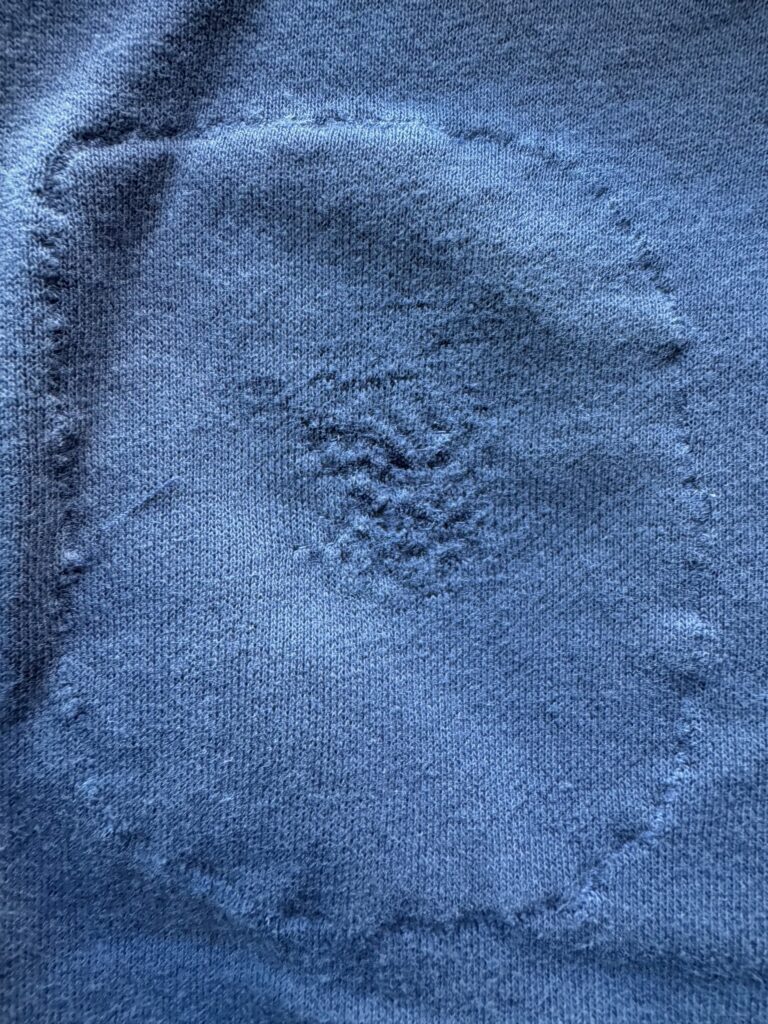
Before we’re ready to pass along items that he’s outgrown, I double check to make sure that they’re in good shape. If not, I fix them. If they’re too far gone, some become ‘donor’ items for patches or repairs and others are added to a re-use pile. I try to re-sell before donating.
The Recap
Know what you NEED and only buy those things. Look to secondhand first. Mend items to keep them in good repair. I like all of these because they’re not only good practices for working toward a low-waste lifestyle. They’re also great for saving a bit of money.
Do you mend too? Buy only what’s needed? Share your low-waste or sustainable back-to-school shopping tips in the comments or send me a message!
Good advice here. As the recipient of the hand me downs, we are grateful that you’re so generous with [your child’s] old stuff, as is J, the adorable 6 year old who gets them after [my child]. I loved the post on zero waste lunches. I think my desktop crockpot fits well into that vibe.
I’m happy to pass things along! I’m glad that they continue to be useful long past my kiddo’s use of them. Thanks for the kind words about the zero waste lunches too! Your tiny crock pot is very much the vibe. 😉
Comments are closed.