I have a lot of scraps of fabric. This is not really a surprise, given that I keep ALL of the little bits and pieces leftover from larger projects, both business and personal. One big source of scraps is the mending and clothing alterations that I do for various members of my household, which I’ve mentioned a few times here and on Instagram over the past few months.
In an effort to motivate myself into doing something with these relatively small pieces of knit fabric,* this week’s post is all about what to do with leftover shirt sleeves and pant legs specifically. So if you’re also up to your knees in leftover sleeves and pant legs (or if you’re hesitant to start making these kinds of alterations for fear of the leftovers) and need some ideas, read on!
*While most of what follows it about knit fabrics (at least a bit stretchy), many of these ideas could also work with woven fabrics (not so stretchy). Give it a try with what you have and let me know if you’d like to see a post about what to do with woven leftovers!
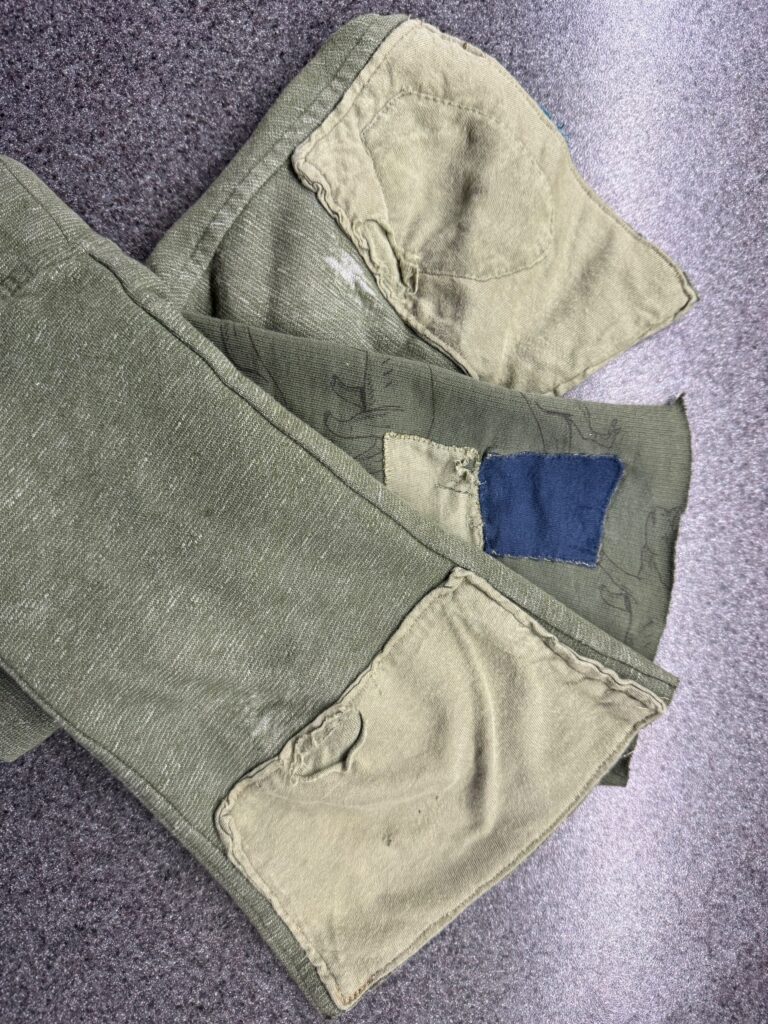
These are kid-sized pant legs that I patched (and patched) before cutting off for shorts. I used leftover shirt sleeves for these patches.
Big Scraps!
Sleeves and pant legs are actually pretty big scraps! Here are 7 things that I’ve done that can help you to manage the leftovers and keep good textiles in use.
1. Patches for clothing that has become a bit hole-y or thin.
Try to match the type of fabric (e.g. woven with woven or knit with knit). Do your best to also match the weight of the fabric, e.g. denim with denim or t-shirt with t-shirt. I’ll often use bits of left over pant legs that have been turned into shorts to add some reinforcement to the knees of pants that are still in use. The shorts are made if/once the knees are too worn to fix or if they’ve become too short! If the pants, like any other clothes are still in good shape, they are sold on or passed along for someone else to wear.
Practice your mending on clothing (kids and grownups alike) that will be used for play or messy activities. I started patching and mending my own t-shirts as they moved from being everyday wear to what I’d wear for painting or cleaning. The pant legs above went from school clothes to play clothes as the mends became piled on top of one another. You decide when it is finally time stop mending and start cutting off.
2. Easy bags for storing small-ish items.
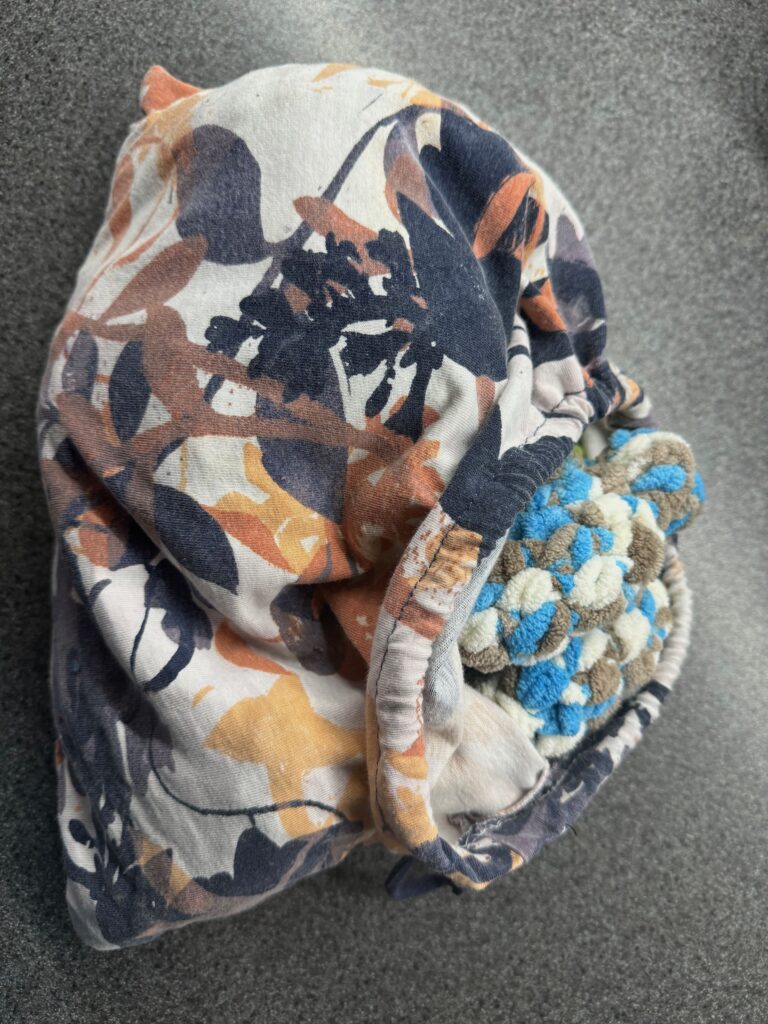
I tend to do this with the legs of knit pj pants that have worn thin near the top. Cut the pant legs to roughy the length you want the bag to be plus a bit to finish the edges. Sew it up however you like. Hand sewing is fine. So is machine sewing. So is making woven or tied edges. You do you. Add a drawstring if you like or just close it with a piece of fabric yarn (see #6 below). These are great for storing parts for toys and games (our Scrabble tiles are in one, for example). They’re also handy as shoe bags for travelling, to protect delicate items in your closet, as covers for hot/cold packs, project bags, and more. You get the idea.
This bag holds our collection of reusable water balloons.
3. Draft blockers for doors and windows.
Fill with old clothes, a towel, or something heavier, tie off the ends, and put it wherever the weather is creeping into your house. Join more than one together as needed for length. Wash as necessary.
4. Cloths for all kinds of things
Use pinking shears or an overlocker to keep the edges from coming apart. Know your fabrics as much as you can: a soft cotton shirt sleeve could be a great reusable makeup remover cloth or handkerchief. Synthetics, not so much.
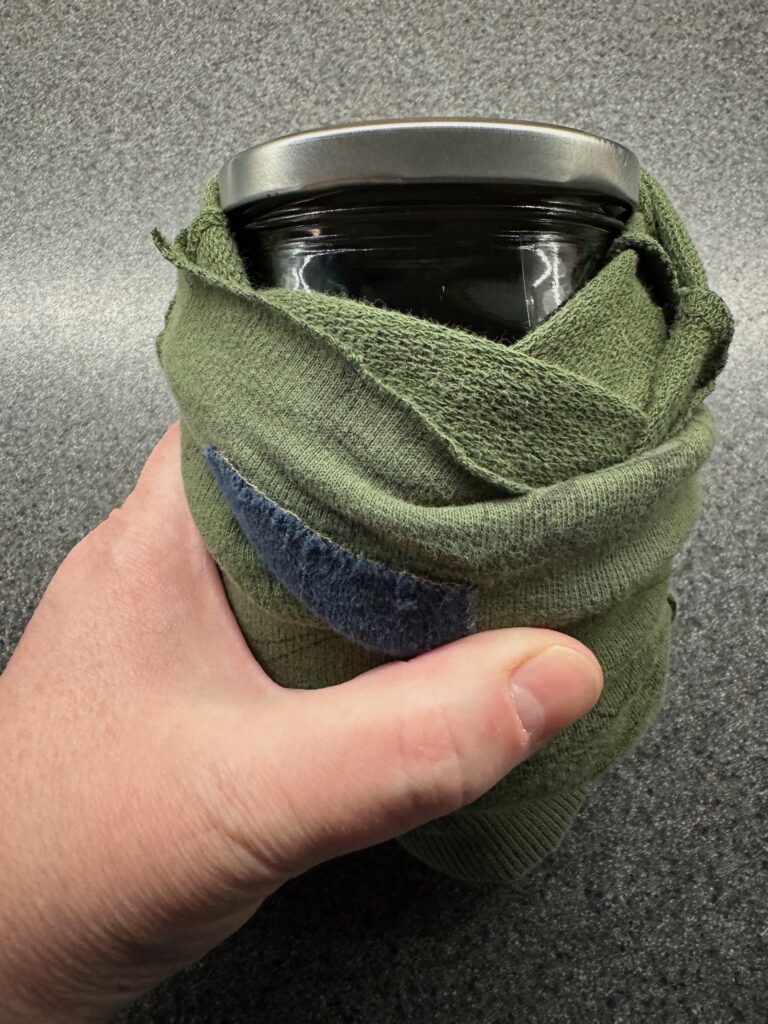
5. Sleeves for glass containers in your lunch or for zero-waste bulk shopping.
Cut to needed length and tie off for security. Finish the edges if you want. These are easy to remove and washable. If you’re aiming to reduce the noise of lunch containers clinking together, something relatively thin, like a t-shirt sleeve, is probably ok. For bulk shopping, though, pant legs are a better choice. They’ll do a better job of cushioning heavy filled jars. Double up if you like.
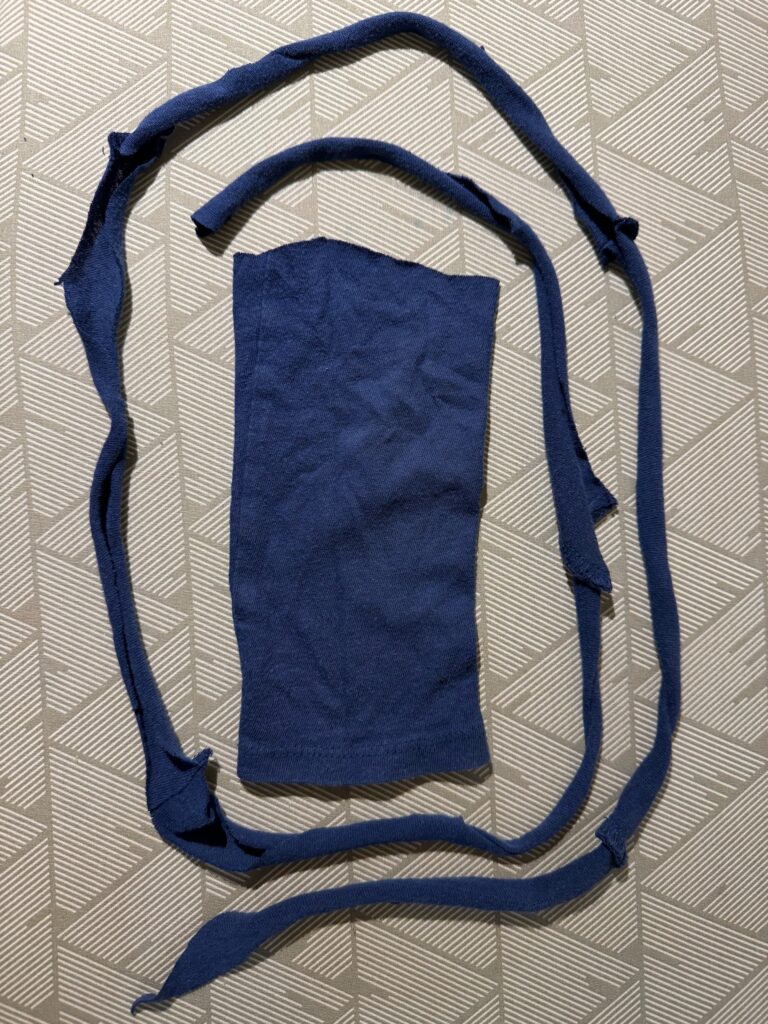
I made all of this fabric yarn from the partner of the kid-sized sleeve leftover shown in the centre.
6. Fabric yarn.
Knit t-shirt sleeves (and, really, the rest of the shirt as well) are probably better than pant legs for fabric yarn. I use this primarily as a ribbon replacement for gift wrapping but there are many other possible uses. All I do is cut strips about 3cm (1in.) wide and give them a gentle pull to help them curl in on themselves. If you need something very long, cut the sleeve in the round, like a spiral. They won’t fray (but will shed a bit of lint as you pull on the yarn), so no need to finish the edges.
Got woven fabrics you want to try this with? Go for it! Skip the pull and curl method, though. Finish the edges or use pinking shears to keep the soft frayed edges from getting too messy, if that’s not your thing.
7. Stuffing for other projects.
As I make or mend things that use larger sleeve- or pant leg -sized pieces, more and more of these little bits are created. They go into containers with threads and other small bits to be used as stuffing for other projects. My current scrap-filled project is a floor pouffe.
Let me know if you’re interested in a post about what to do with these little pieces.
Let me know in the comments below or send me a message if you’d like some step-by-step instructions for making any of the above!
What do you do with leftover sleeves and pant legs? Please share in the comments!
Looking for the Something Different Upcycled Shop? Click here to go there!