Fall has officially begun and it seems that a lot of people are VERY excited about Halloween and ‘spooky season’ more generally. Don’t get me wrong: I LOVE autumn (or fall, whatever you call it where you are). It’s my favourite time of year, but not so much for the ‘spooky season’ vibes or for Halloween. I’m into the shift in weather, the changing leaves, the smell of rain and fallen maple leaves, and getting cozy. Warmer clothes, layers, and more luxurious textures of fabrics, like corduroy. I love it all.
But
I don’t love all of the plastic, disposable or poorly made decorations that seem to be absolutely everywhere. But some of the seasonal decor is actually kind of nice, right? But, here at my place, we definitely don’t NEED more seasonal decor. So I came up with a few ideas to keep me focused on not buying stuff we don’t need and that has no special meaning for us. Keep reading for my top five suggestions for low-waste seasonal decorations.
Special note for those with young children: Decorating for the seasons is a entirely different thing if you have young kids at home. Brightly coloured leaves, random bits of school artwork, and homemade paper snowflakes are wonderful examples of ways to bring the seasons into your home. Take photos and videos to help remember this phase in your lives. Consider hanging on to some of the things the kids make as cherished pieces that are brought out annually (see #2 below for more on this).
Before I get started
I want to say that if seasonal decorating is important to you, that’s great! This post is about providing alternative ways of thinking about seasonal decorations in general and the fall/winter more specifically. Ways that don’t involve buying a lot of new pieces every year.
This post is NOT about discouraging you from doing what you like to decorate your home or observe the seasons. Do things that are meaningful for you, your household, and your community. I think that deliberate and careful consideration before you bring something into your home is a great way to do that.
1. Meaningful is marvellous
Mindful, considered purchases – especially from small businesses and artisans – are always a good idea. From my point of view, it makes sense to find meaningful things, made with care, and cherish them year to year. I love being able to tell a story about where and when a certain item came to be mine.
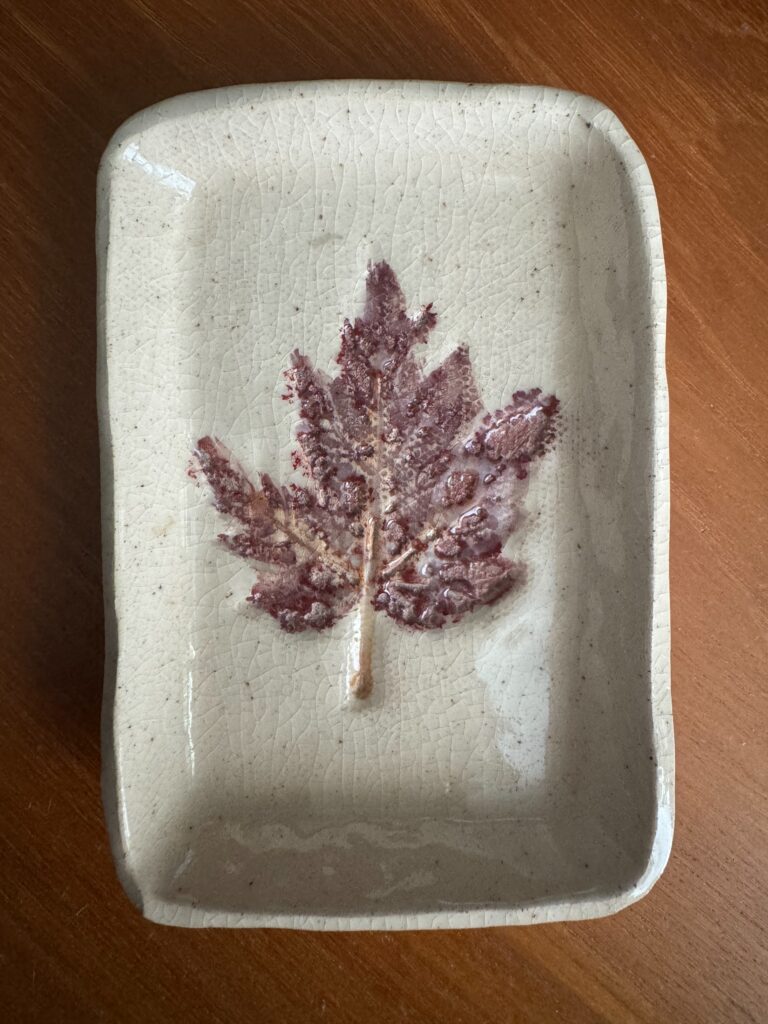
For example, I have a small rectangular dish with a maple leaf imprinted on it. I bought it about twelve years ago, from the person who made it, at the farmers’ market that set up every Saturday morning in the parking lot next to the building where I lived at the time. I regularly bought food from them. And although I have unfortunately forgotten their name, I can still see their face clearly in my mind. That’s a meaningful connection to a specific time, place, and maker, and I think of all three every time I see that dish.
2. Welcome your treasured pieces back each year
No one needs new decorations every year. Try to bring into your home only things that you love, store them carefully out-of-season, and use them year after year. Build traditions around them. Make their return a reason to celebrate. Maybe you have apple cider when the fall decorations come out, or play special music, or put on a specific movie in the background when the winter stuff re-appears. Do your best to try to keep the feeling that you love about the season from being overshadowed or completely eclipsed by the stuff that accompanies it.
3. A Helpful Phrase
Here’s a phrase to keep in mind as we officially enter fall: I love this season because ____ and I don’t need ____in my home to get that feeling. By thinking about what you love about the season, you become more aware of what’s really important to you about it, which then helps you to focus on the feeling rather than the stuff.
For example, “I love this season because of the beautiful changing colours of the leaves and I don’t need a leaf garland in my home to get that feeling.”
Or “I love this season because pumpkins are awesome and I don’t need this 12 pack of foam pumpkins in my home to get that feeling.”
Or (last one, I promise) “I love this season because I enjoy getting cozy to watch scary movies when it gets dark earlier and I don’t need fake skeletons on my lawn/balcony/roof to get that feeling.” (Probably best to avoid real skeletons too.)
You could use this phrase to help put limits in place too: Perhaps the giant skeleton head and torso that looks like it’s coming out of your lawn with eyes that light up is an absolutely perfect match for your household. But what if you’ve already got a giant skeleton that clings to the side of your house every year? “I love this season because it is fun to decorate the outside of my house and I don’t need TWO giant skeletons to get that feeling.” What to do? Pick one. If you choose the new one, you must sell on the old one. I’d guess that the odds are pretty good that someone would LOVE to adopt your giant skeleton and have it cling to the side of their house this year.
4. Secondhand First
I know that the temptation is REAL to thrift decor pieces. Thrifting, swapping pieces with friends or family, or otherwise acquiring things secondhand are great ways to introduce some variety into your decor but, again, be mindful of what you’re bringing into your home. It is certainly possible to buy too much secondhand, so remember that donating items that you don’t want at the end of the season is NOT a solution for having bought too much stuff in the first place. There is no AWAY when things leave your possession. Everything goes somewhere. Too often, that is to a landfill so – of course – avoid single-use whenever possible.
While we’re on the topic of single-use: that fake spiderweb stuff is an environmental and ecological horror show all on its own. Nothing but microplastics, damage to plants, and trapped insects, birds, and small mammals. Please don’t use it.
5. Plants over Plastic
If you do feel compelled to change up your seasonal decor every year, you could choose pieces that are actually plants that are seasonally appropriate to your location. Here in Canada, pumpkins and gourds for fall, or branches and seasonal flowers for winter are all great choices. These can then be composted at the end of the season.
Ask a farmer near you whether they want your leftover whole pumpkins from Thanksgiving and Halloween to feed to their livestock. If you have a real tree for Christmas or boughs to decorate for winter and it is available in your area, consider taking them to be chipped and composted during charity drives in early January.
How do you say no to stuff you don’t need? Please send me a message or share in the comments below.
Are you interested in a post about low-waste Halloween ideas? Let me know!