A couple of weeks ago, I posted 4+ Ideas for Sustainable and Memorable Wedding Party Gifts here on the blog. Even as I was writing it, I knew I wanted to follow it up with a post about reducing waste at parties and celebrations more generally. This is that post.
TL; DR: Low-waste celebrations are absolutely possible but they require thought and planning to ensure that you have the time to source what you need. You also need to plan to appropriately deal with items that are left after the event.
Let me say, before I begin, that these are all ideas.
They’re not even suggestions, let alone a set of instructions or a how-to guide. Take whatever inspiration you can from the following and leave the rest. Low-waste celebrations are absolutely possible. Like most things involved in living a more sustainable life, though, they require some careful thought and consideration and are probably not entirely possible for everyone. I know that if I was to plan a celebration, it would almost certainly not be as low-waste as I would like. We’re all learning! It takes some time to break old habits and develop new ones. Give yourself some grace to make the decisions that are right for you and the celebration you’re planning.
Graduations, birthdays, retirement parties, family reunions, weddings, and the like all have the potential to generate a lot of waste. Read on for 5 ideas (and a bonus!) about how to reduce the waste created by your event.
1. Be realistic about what you actually need.
It is so easy to get carried away as you plan a celebration of any kind. In most cases, your guests will remember an overall feeling rather than details. Work toward creating that feeling and don’t stress about all of the over-the-top bells and wasteful whistles. Think creatively about alternatives to single-use items. Maybe not everything you’d like to have is available to you. Maybe you have other considerations that must come first over the amount of waste your event creates. Do your best with what is accessible to you.
2. Secondhand should always be the first choice.
Borrow, thrift, and rent what you need rather than buying new stuff. This can extend all the way from tablecloths to centrepieces to decorations. Check out Kijiji, Facebook Marketplace, Craigslist, or wherever else your community offers things up to buy, sell, or trade. Don’t overlook your local BuyNothing group too! It’s worth asking for what you need; someone might have a bunch of event table linen, for example, just sitting in storage that they’ll happily pass along. Lending libraries are also great resources – I read about one that had an entire set of dishes for people to borrow!
Pro tip: Compare your secondhand options.
I know of someone who is planning a wedding and wants to have vintage-y floral plates for guests to use during the meal. Renting from the catering company she’s hired is a lot more money than she’s willing to spend. Instead, she’s enlisted her friends and family to help look at thrift stores for the kinds of plates she wants. She plans to donate them back after the wedding.
Another example: my child needs a shirt of a specific colour for a school-wide event in a few days’ time. I could borrow a shirt from friends BUT I know that I can probably find one at the local kids clothing resale shop. I’ll choose the latter this time because I know that my kiddo needs t-shirts and has said that he’ll wear it over the summer. Two tasks accomplished in one go! We’ll sell it on or donate that shirt once he’s outgrown it. If it is too stained or damaged for that, I’ll cut it up to use for cleaning cloths, patches for other clothing, or to be made into a soft storage bag.
3. Consider working backwards.
See what is available and then choose your event colours, theme, and decor. Try to be as flexible as you can if your goal is to be waste-free. Sometimes the goal is to be festive and the specifics are less important. Admittedly, this probably works better for events involving adults, but creativity is your friend for kids’ parties too. Think of colours associated with the theme your child wants and go from there! Solid red and yellow can work for a Pokemon or Lego theme, for example, while blues and greys might work for a Thomas- or space-themed party.
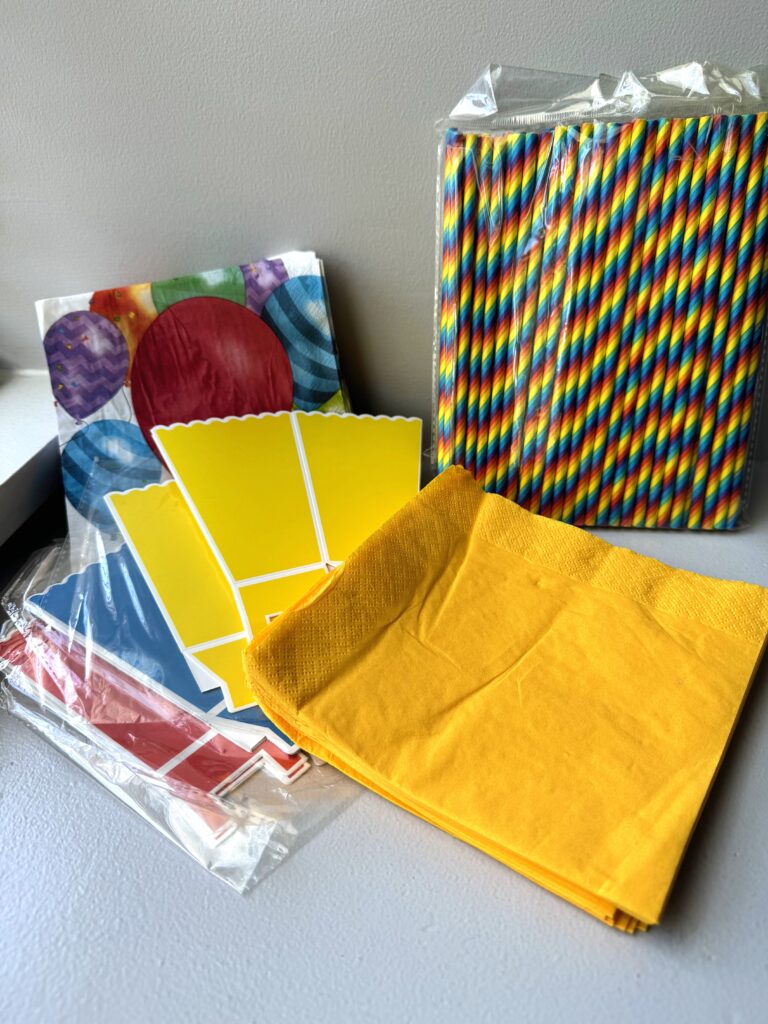
The fewer things you need to have custom made for you, the better. And the fewer specifically-themed items you need to buy, the better. Don’t forget to look for those items secondhand before buying new! If you do need to buy single-use items, look first for things that can be recycled or composted in your area.
4. Think carefully about location:
How will guests get to where you are planning to have the event? If everyone is local, could they walk, bike, carpool, or take public transit? Consider providing information about the closest transit stop or bike path, for example, on your invitations or other communications about the event. If you have people coming from all over the place, is there a location option that would require as few people as possible to fly or drive long distances?
5. Find out what happens to food that is NOT consumed at your event.
This is especially true for catered events. We all know what happens to leftovers from events involving home cooking: Everyone takes some leftovers, or, the host eats those leftovers for DAYS. In the case of food waste in the kitchen and that left on people’s plates at a catered event, learn about how organic waste is dealt with by the people preparing your meal. In the case of food prepared but not served, ask whether this is offered to staff or donated to a community group that feeds unhoused people, for example.
Food waste is a BIG deal, and is a big concern as you work to create as little waste as possible. Remember that just because YOU don’t have to deal with the waste, it doesn’t mean that there is no waste that SOMEONE will have to deal with. Consider working with a caterer/chef that partners with local farmers to increase transparency about where your food comes from.
Bonus!
Super obvious, I think, but it still should be mentioned so as to cover all the bases:
Choose reusables for everything you possibly can.
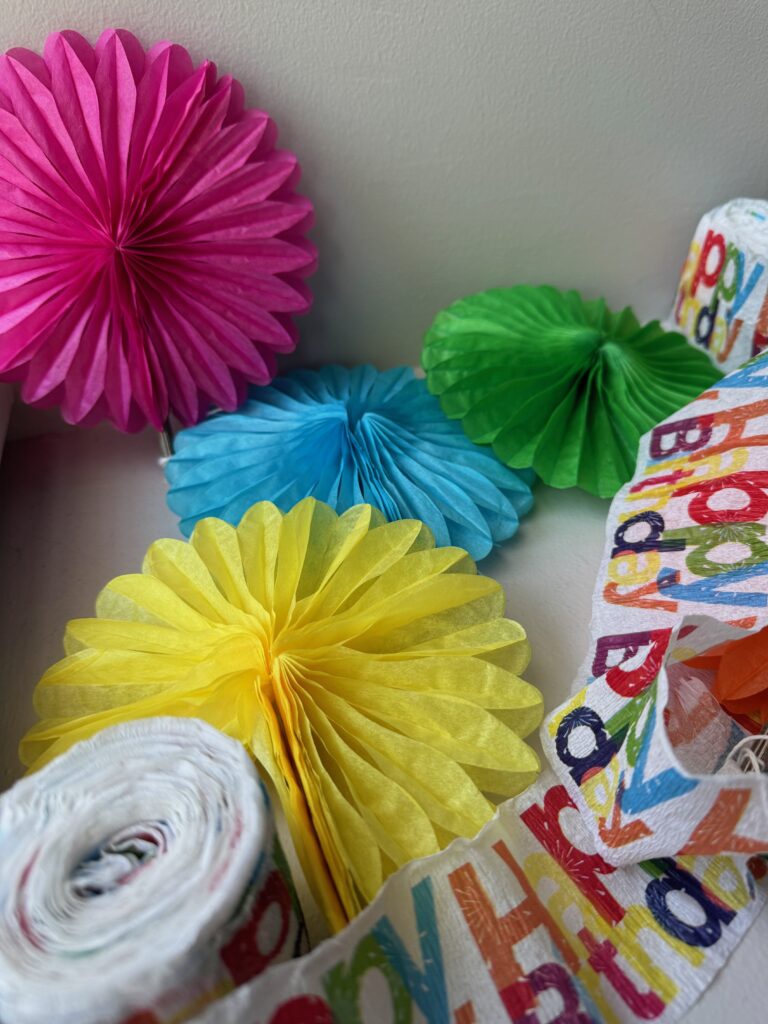
Reusable glasses or cups for drinks, plates and utensils for food, as well as napkins are all great choices. Decor and theme items can also be reused or passed along. We’ve been re-using ‘happy birthday’ streamers, paper accordion balloons, and other decor items for 3+ years now. Ask around: maybe you know someone who does the same and would be happy to lend you some things or pass them along if they’re no longer needed. Don’t forget your local BuyNothing group!
If you’re having a party outdoors, consider asking guests to bring their own cups or mugs. This makes it easier for everyone to keep track of and reuse their drinking vessel throughout the event. You might even be able to ask guests to bring their own eating utensils and plates, depending on the event and the crowd. A camping themed birthday or graduation party would probably be more appropriate for this than would a retirement party with a catered, sit-down meal, for example.
A controversial take (maybe)…
Balloons are the worst! They don’t last long once inflated (but last forever otherwise), break into pieces, end up in waterways, confuse marine wildlife who mistake those pieces for food, and are incredibly difficult to recycle. Deflate and reuse the big shiny ones or pass them along once you’re done with them. Don’t let ANY balloons escape up into the sky! Dispose of broken ones appropriately.
Please, please, please try to find an alternative to balloons. If your child is expecting balloons at their party, explaining to your kiddo why you’re choosing alternatives can go a long way toward making this a new tradition in your family. You have a wonderful opportunity to start changing what’s normal for kid’s parties, one party at a time.
AND! If your family loves water balloons, there are reusable options, including some that you can DIY!
Remember that the most sustainable thing is the thing that already exists. The reality is that many of us are slowly working toward choosing reusables over single-use all the time. That’s OK! If you have single-use items kicking around that you’d prefer not to use for your event, reach out to shelters, schools, or other community organizations for whom single-use items are still at least sometimes necessary. Find somewhere that can make use of them rather than trashing them.
Congrats for whatever it is you’re celebrating! Have a blast at your party. Incorporating low-waste thinking into planning for your next event will be so much easier now that you’ve done it once! Yay!
If you’re somewhere in the world where low-waste celebrations are totally normal, please share in the comments or send me a message! What do celebrations look like for you?